

A Guide to Watching Football Socially in Riga

The best football nights are rarely about watching every pass in silence. They are about the roar after a last-minute goal, the friend who insists the referee has lost the plot, and that first cold pint arriving just before kick-off. This guide to watching football socially is for anyone who wants more from match night than a sofa, a dodgy stream and a group chat full of delayed reactions.
Whether you are a local, visiting Riga for the weekend or looking for a reliable place to meet your crew, the aim is simple: find the right people, the right screen and a pub atmosphere that makes the whole evening feel like an occasion.
A guide to watching football socially without the faff
Watching football with other people works best when the plan is easy. Nobody wants twenty messages asking where to go, whether the match will be on, or if there will be room for six people turning up ten minutes before kick-off. Pick the fixture, choose a venue with proper screens, and agree on a meeting time that gives everyone a chance to settle in before the action starts.
A good social football night has a bit of structure, but it should not feel over-organised. Tell the group which match matters, book ahead if it is a big game, and let the rest take care of itself. The best nights leave room for a pre-match catch-up, a debate about the starting line-up and, if the result goes your way, one more round after the final whistle.
Choose the match, then choose the mood
Not every football match needs the same kind of night out. A huge derby, a European knockout tie or an international tournament match calls for a lively crowd and plenty of noise. That is when being surrounded by other fans turns every chance, tackle and VAR check into a shared event.
For a regular league fixture, the mood may be more relaxed. You might want a few mates, hot food, a decent beer and enough space to chat between attacks. Both are good reasons to go out. The key is matching the venue to what your group actually wants, rather than forcing a quiet catch-up into a packed big-game crowd or expecting a low-key Tuesday to feel like a cup final.
If your group supports different teams, all the better. Friendly rivalry gives the night some edge, as long as everyone remembers it is meant to stay friendly. A little banter is part of the deal. Nobody needs a sulk because their mate celebrated a goal two tables away.
Get the group sorted early
The social side of football can fall apart before the first whistle if nobody takes the lead. One person does not need to become the full-time organiser, but it helps when someone sends a clear message: match, kick-off time, venue and whether a table is booked. That is enough.
Numbers matter more than people think. Two or three of you can often be spontaneous. For a larger group, especially during major tournaments or headline fixtures, booking is the sensible move. It means you can arrive together, keep the group together and focus on the match instead of hunting for a corner with a view of a screen.
Try to arrive 30 to 45 minutes before kick-off. It is long enough to order food, get drinks and find your bearings, without turning the evening into a waiting game. For the biggest fixtures, earlier is better. A packed pub before a massive match has its own buzz, and missing the build-up is half the fun gone.
Pick a seat that suits your group
The perfect table depends on why you are there. If the match is the whole point, sit where everyone has a clear view of a big screen and can hear the atmosphere around them. Avoid making half the table crane their necks for 90 minutes. It sounds obvious, but it is often the difference between a great night and a frustrating one.
If you have a mixed group, find the balance. Some people will be there for every tactical change, while others mainly want a lively evening with friends. A venue with multiple screens is ideal because the football stays front and centre without making conversation impossible.
At The Thirsty Bulldog, the combination of big screens, cold local draught beer and a central Old Town setting makes it easy to bring together serious fans and friends who simply want a proper night out. The point is not to pretend everyone is a pundit. It is to make sure everyone has a good time.
Food and drink are part of the match plan
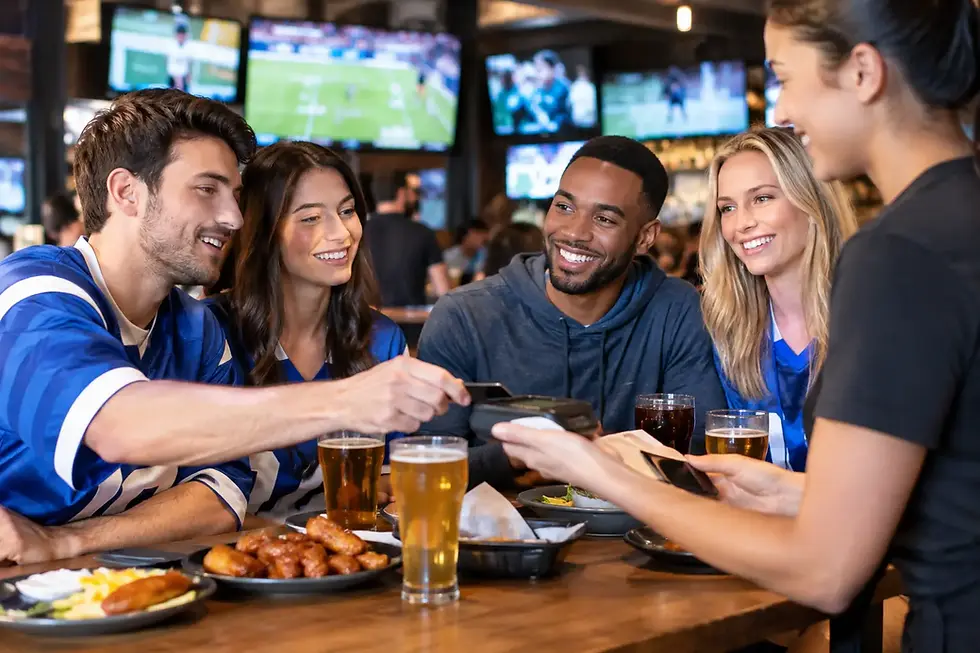
Football is better when nobody is distracted by hunger. A quick snack might do for an early match, but a big evening kick-off deserves hot food that can handle a table full of hungry people. Pub food is practical for a reason: it is easy to share, easy to eat between moments of drama and satisfying enough to keep the night moving.
Order early if you are eating before kick-off. Once the match starts, you do not want the whole table buried in menus while everyone else is reacting to the opening goal. Sorting food and the first round beforehand gives the group a chance to relax into the game.
Beer is an obvious football-night favourite, but the best choice is the one that lets you enjoy the full evening. A cold draught lager suits the occasion nicely, while soft drinks and alcohol-free options mean everyone can stay involved on their own terms. Pace yourself, particularly if you are planning to carry on after the match. A 90th-minute winner feels even better when you can remember celebrating it.
Keep the banter onside
A social football night needs energy, not arguments. Celebrate your side, have your say about the referee and give your rivals a bit of grief when the moment calls for it. Just know the line. The people at the table beside you are there for the same reason you are: football, good company and a break from the ordinary.
That is especially true in a city-centre pub where locals, expats and travellers can all end up watching the same game. Different clubs and different languages do not stop a crowd from understanding a brilliant goal or a terrible miss. Respect the room, enjoy the shared reaction and leave the personal stuff out of it.
Put your phone away when the match is properly getting going. Taking a quick photo of the table or sending a half-time message is fair enough, but constant scrolling takes you out of the atmosphere you came for. Live football is better when you are actually in the moment, not watching the reaction through somebody else's screen.
Make room for the moments around kick-off
The match gives the night its shape, but the memories often happen around it. It might be the pre-match prediction that goes spectacularly wrong, a mate trying hot wings with far too much confidence, or the post-match debate that somehow lasts longer than the game itself.
Do not rush off the second the whistle goes if the evening is still rolling. Win, lose or draw, give the group time to talk it through. If your team has won, enjoy it properly. If they have lost, a good pub and good company can soften the blow. Football has a funny way of turning disappointment into a story worth retelling by the next fixture.
There is also no need to make every match a major event. A casual midweek game can be exactly the excuse your group needs to get out, eat something hot and catch up. Social football works because it gives people a reason to show up. The football starts the conversation, but the company carries the night.
Your next match night starts with one message
Choose the game, gather the people who make it more fun, and get your spot sorted before the crowd arrives. Then order something good, find the screen and let the evening take over. The perfect football night is not about getting every prediction right. It is about sharing the moments that make football worth watching in the first place.


Comments