

Is Bar Food Good for Sharing? Pub Group Tips

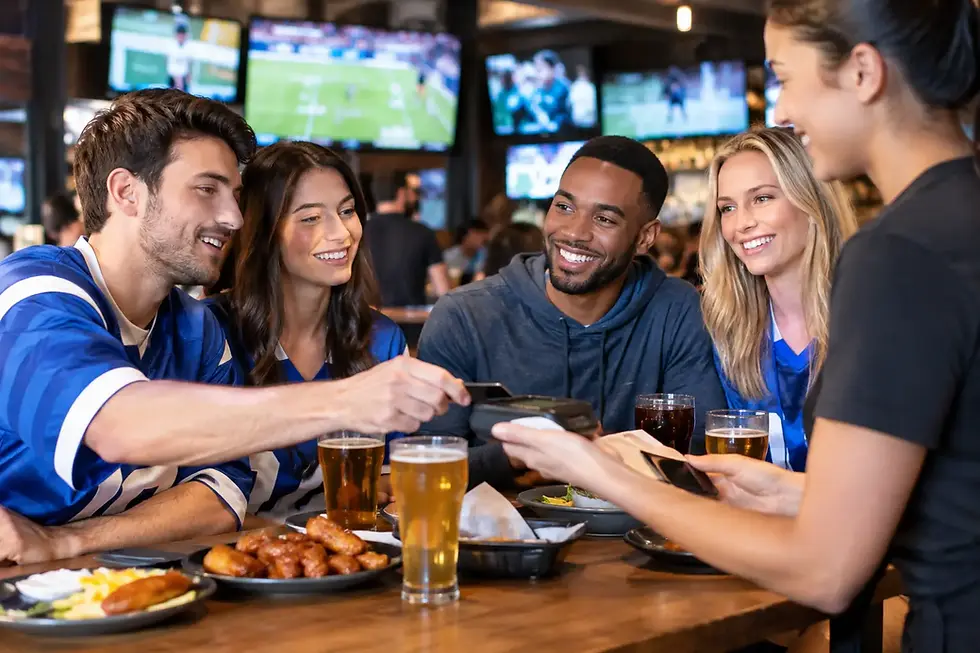
A table full of food changes the mood before the first whistle. Someone reaches for a wing, someone claims the last loaded fry, and suddenly the group has more to talk about than the score. So, is bar food good for sharing? For a proper pub night, absolutely - provided you order with the group, the timing and the occasion in mind.
Sharing food suits the way people actually spend time in a sports pub. You are not settling in for a silent, three-course dinner. You are catching up, watching the football, debating a decision that was clearly wrong, and deciding whether there is time for one more round. Good sharing plates keep the table sociable without making anyone put their pint down for too long.
Is bar food good for sharing on match night?
Bar food is at its best when it is easy to grab, full of flavour and forgiving if you miss a few minutes of it while celebrating a goal. Wings, loaded fries, onion rings, nachos, fried bites and other familiar pub favourites all work because they arrive ready for the middle of the table. Everyone can have a bit without the need for a formal plan.
The real advantage is variety. A group rarely agrees on one perfect dish, especially when some people want something spicy, others want something cheesy, and one mate insists they are only having a snack before ordering again later. A few dishes with different flavours give everyone a choice and make the table feel generous.
There is a practical side too. Sharing plates often make more sense than each person ordering a full meal straight away. If you are meeting early for a big fixture, you can start with food, see how hungry everyone is after the first half, then order more if the night is still rolling. It keeps things relaxed and helps avoid a table covered in untouched meals when the action gets good.
That said, sharing is not automatically the best option for every group. If someone is properly hungry, has dietary requirements, or simply does not enjoy negotiating for the last piece, they may prefer their own plate. The strongest table orders usually mix both: enough shared food for the group, with individual meals where they make sense.
What makes a sharing plate worth ordering?
The best sharing food is built for real pub behaviour. It should be easy to eat with fingers or a fork, satisfying with a beer, and able to sit on the table for a little while without losing all appeal. Crispy food matters here. A plate that goes soggy in five minutes is less useful when everybody is looking up at the big screen.
Portion size matters more than presentation. A dish can look brilliant when it lands, but if it disappears after three bites, it has not done much for a group of six. Go for food that has plenty of individual pieces or can be divided naturally. Wings and fried snacks are obvious winners. Loaded fries and nachos work brilliantly too, as long as there is enough topping spread across the plate rather than piled in one corner.
Sauces are part of the fun, but they need a little thought. One spicy option can wake up a table, particularly for people who enjoy a bit of heat with their beer. A range of dips keeps things friendly for everyone else. The goal is not to turn every order into a chilli test unless that is exactly what your group came for.
At The Thirsty Bulldog, a Hot Wing Challenge can be the right call for the brave person at the table. For everyone else, it is often better as a bit of theatre alongside shareable favourites that allow the whole group to eat comfortably.
Food that keeps the conversation moving
Sharing plates work because they create small moments. Passing a basket across the table, offering the final onion ring, warning someone that the sauce is hotter than it looks - these are simple things, but they make a night out feel more connected.
Individual meals can create a different rhythm. Everyone gets their own food, focuses on finishing it, then gets back to the match. There is nothing wrong with that, particularly for a quieter catch-up or when people have arrived hungry. But for birthdays, work drinks, stag or hen groups, visitors meeting locals, and match nights with a full table, sharing food gives people a reason to interact from the start.
How much bar food should a group order?
There is no exact formula because appetite depends on the time, the drinks, and whether food is the main event. Still, a useful approach is to begin with two or three shareable dishes for every four people, then add as needed. If the group is meeting for dinner, order more substantial food from the outset. If you are arriving shortly before kick-off and staying for drinks, start lighter and build the table over the evening.
Avoid ordering everything at once unless you know the group is starving. A mountain of food looks impressive for about two minutes, then cools down while everyone tries to work out where to begin. Staggering the order is usually smarter. Put out a couple of crowd-pleasers first, then bring another round after half-time or once the opening plates have done their job.
This also gives you a better sense of what people actually like. If the loaded fries vanish immediately but the spicy bites are still sitting there, you know what to order next. There is no need for a spreadsheet. Just pay attention to the table.
A simple order for different group sizes
For two people, one generous shared dish alongside drinks can be enough for a casual visit. For three or four, choose a mix of something crunchy, something filling and a sauce-led option with a bit of kick. Larger groups should think in rounds rather than one huge order. It is easier to share, easier to keep warm, and it stops the quickest eaters from clearing the table before everyone has had a chance.
If the match is the main reason you are out, timing is as important as quantity. Order before the busy period if you want food on the table before kick-off. At half-time, expect everyone else to have had the same idea. A reservation helps when you want a proper base for your group, especially for a major fixture in Riga Old Town.
Pairing sharing food with beer and the match
Cold draught beer and salty, crispy food are a classic pairing for a reason. The food gives the drinks a proper place in the night, while the beer cuts through richer flavours and keeps the table ticking over. You do not need to overthink it. Order what the group genuinely wants, rather than trying to build a perfect tasting menu around the lager.
A mix works well. Cheese-heavy or loaded dishes suit easy-going lagers, while spicier food can feel even sharper beside a cold pint. If your group is trying a few different beers, familiar pub food gives everyone a reliable base. Nobody wants to gamble on a delicate dish while trying to keep an eye on a penalty shoot-out.
Remember the people who are not drinking beer too. Sharing food should not feel like an add-on reserved for the pint drinkers. Water, soft drinks and other choices still belong on a table built for a long, sociable evening. Good hospitality means everyone has a spot in the round.
The small rules that make sharing easy
Most groups do not need rules, but a little pub etiquette keeps the mood good. Do not hover over one dish as if you own it. Do not double-dip. If there is one final piece and everybody has been eyeing it, offer it out before quietly making your move.
More importantly, order enough. Nothing takes the shine off a relaxed night faster than a table where two people are still hungry and everyone else is pretending not to notice. If you are unsure, add another side or bring in one more dish after the first round. Extra food is usually easier to solve than an underfed group.
The best sharing order is not the biggest one or the most photographed one. It is the food that lets your mates settle in, keeps hands busy between big moments, and gives the night a little more life. Pick a few plates, make room for the pints, and let the table do what a good pub table does - bring everyone together.


Comments