

Guide to Pub Food Sharing for Match Nights
- Thirsty Bulldog
- 4 days ago
- 5 min read

A crowded table, a big match on screen and everyone saying they are only having a few chips is how the best pub nights begin. This guide to pub food sharing is about getting the order right: enough hot food to keep the group going, enough variety for different appetites, and no awkward moment when the last bite disappears before half-time.
Pub food is made for company. It takes the pressure off choosing one perfect meal, gives people something to reach for between goals, and turns a quick drink into a proper night out. Whether you are meeting mates before heading into Riga Old Town or settling in for the full 90 minutes, sharing plates keep the table in the action.
Start With the Size of Your Group
The right order depends less on how hungry one person says they are and more on how long you are staying. A table of two having a casual pint before dinner needs a different spread from six friends arriving at kick-off and planning to stay until the final whistle.
For two to three people, begin with a couple of shareable plates and see how the mood goes. This works especially well when food is there to support the drinks and conversation, rather than replace a full meal. If you are a group of four to six, plan for a wider mix from the start. One large dish rarely goes far once everyone has had a taste, particularly if the match is tense and pints are flowing.
For larger bookings, think in rounds. Put a first wave of food on the table early so nobody is watching on an empty stomach, then order another round after half-time if the group is still hungry. It keeps the food hot, gives everyone a chance to choose again, and stops the table becoming buried under more plates than it can handle.
Build a Pub Food Sharing Order With Variety
A good shared order has contrast. You want something crispy, something filling, something with a bit of heat, and a dependable crowd-pleaser for the friend who claims they are not fussy but definitely has opinions. The aim is not fine dining balance. It is a table that gives everyone a reason to reach in.
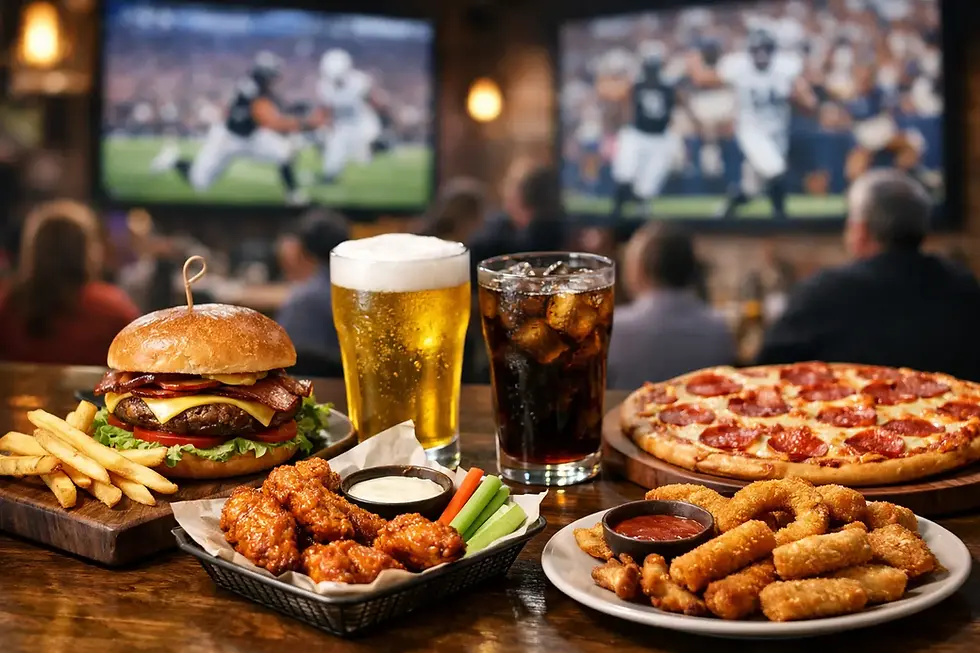
Start with the easy wins: chips, wedges or another potato-based side are usually the first to vanish and make a useful base for the rest of the order. Add a fried or crunchy option for that satisfying pub-food bite, then bring in something more substantial such as a burger-style dish, loaded plate or hearty snack that can be divided without too much fuss.
Then decide how much heat your group actually wants. Spicy food is brilliant for people who enjoy it, but it should not be the only thing on the table unless everyone has agreed. A hot wing challenge can turn an ordinary night into a story worth retelling, but it is a commitment, not a warm-up snack. Keep a milder plate nearby for those who are happy to cheer on the brave souls without joining them.
Sauces matter more than people think. They add flavour, make simple bites feel less repetitive, and invite the usual debate over which one is best. Ask for enough to go around where possible. A single dip for a table of five has a very short life expectancy.
Give Everyone a Fair Shot
The quickest way to spoil sharing food is to assume everybody eats the same thing. Before ordering, ask one simple question: is anyone vegetarian, avoiding certain ingredients, or not keen on spice? It takes ten seconds and can save the group from having to make a late second order for someone left with nothing but chips.
It also helps to choose plates that are genuinely easy to share. Food that can be picked up, passed around and enjoyed without a knife-and-fork operation is usually the best fit for a lively pub table. You are there to watch the game and talk rubbish with your mates, not perform complicated plate logistics during a penalty.
Time Your Order Around the Match
Match-night hunger does not follow a neat timetable. Someone arrives saying they have already eaten, then sees a basket of hot food land on the table and changes their mind immediately. Timing is why sharing works so well.
If you are arriving before kick-off, order early enough that the table is sorted before the game gets serious. This is the relaxed part of the night - people are finding their seats, checking the line-ups and choosing their first drinks. Having food ready before the opening whistle means less time splitting attention between the screen and the menu.
Half-time is ideal for a top-up. You already know what disappeared first, what nobody touched, and whether the group is settling in for another drink. Ordering then avoids overcommitting at the start, especially for smaller groups. The trade-off is that busy match nights can move quickly, so do not wait until everyone is absolutely starving.
For late matches or a night that is stretching beyond football, save room for a final round of food. It is often the difference between a brilliant evening that carries on happily and one that ends because everyone suddenly needs to find dinner elsewhere.
Match Food to the Drinks, Not the Other Way Round
Cold draught beer and hot pub food are a classic pairing because neither needs much explaining. Crisp, salty and spicy bites tend to work well alongside a fresh pint, while heartier plates suit anyone who wants something more filling before another round.
But not everybody will be drinking beer, and that is fine. Sharing food should make the group feel looked after, not force everyone into the same order. Make sure there are soft drinks and water on the table too, particularly if the night has started early or a spicy challenge is involved. It is a small move that makes a long social session much more comfortable.
The best rule is simple: order food people genuinely want, then choose drinks they will enjoy with it. Do not pick the hottest plate on the menu just because someone has ordered a lager. Good pub nights are not about proving a point.
Keep Sharing Civil Without Killing the Vibe
Nobody needs a formal set of table rules, but a little awareness goes a long way. If there is one limited item left, offer it around before claiming it. If you are ordering for the group, say what is coming so people know whether to hold off or add something. And if someone has a dietary requirement, keep their option separate rather than letting it become part of the general free-for-all.
For the bill, it is easiest to agree early whether you are splitting everything evenly or keeping a rough track of who ordered what. Even splits are perfect when everyone is sharing equally. They are less fair when one person has only had a soft drink and three chips while another has treated the table like a personal buffet. No one wants to spend the final minutes of a great night doing complicated maths.
Make the Table Part of the Night
The best shared food does more than feed the group. It creates little moments between the main ones: a mate regretting a spicy wing, someone guarding the last chip, a debate over the next order while the match pauses. That is the point of a proper sports pub. The game is on the screens, but the atmosphere is built at the table.
At The Thirsty Bulldog, the simple plan is often the best one: book your table, arrive hungry, get the drinks in and order enough hot food for everybody to join in. If your group is bigger, choose a broad first round rather than trying to guess every appetite perfectly. You can always add more when the game, the beer and the conversation are going strong.
A shared plate should leave room for one more story, one more round of applause and, if the night is going your way, one more pint. Order for the people at your table, keep it generous, and let the evening take care of itself.


Comments